
Think of YouTube Shorts like a bustling farmer's market in 2026. A few years ago, it was quiet. Today, 70 billion videos are being watched daily, and the crowd keeps growing. But here's the thing—just being at the market isn't enough. You need to know how people are shopping, what they're looking for, and how to make sure they stop at your booth instead of walking past.
The difference between a Short that gets 50 views and one that gets 50,000 views isn't luck or expensive equipment. It's understanding how YouTube's algorithm has fundamentally changed what it rewards. And now, with Shorts showing up directly in Google Search results, the game has gotten even bigger.
Let me break down what you need to know to actually rank your Shorts where people will find them.
Understanding the YouTube Shorts Algorithm in 2026
Before we dive into optimization tactics, you need to understand that the YouTube Shorts algorithm works differently than regular YouTube videos. Long-form videos live by click-through rates and traditional search signals. Shorts? They live by engagement, completion rates, and what YouTube calls "loop-ability."
YouTube doesn't rank Shorts based on how recent they are. Instead, the platform tests new Shorts with small audiences first. If your Short performs well with that initial group, YouTube expands it to wider audiences. This is why a Short posted months ago can suddenly go viral—it's about how well it performs, not when you posted it.
The core ranking signals YouTube watches are deceptively simple but powerful:
YouTube measures what percentage of your Short people actually watch. A 30-second Short with 83% completion signals strong interest. Top-performing Shorts hit 80-90% average completion rates.
Within the first hour of posting, likes, comments, shares, and replies matter enormously. YouTube uses these signals to determine if your Short deserves wider distribution.
Think of this as the "stop-scroll" metric. Aim for 75-80% or higher. Below 50%, and you're fighting an uphill battle with the algorithm.
If your Short naturally loops or viewers rewatch specific moments, YouTube notices. Many successful Shorts are designed to replay seamlessly—ending where they began.
Content Variety Factor
YouTube avoids showing too many Shorts from the same creator back-to-back in the feed. This means each Short largely competes on its own merits, not riding the coattails of your previous upload.
Keyword Research for Shorts: It's Totally Different Than You Think
Here's where most creators miss the mark. They approach Shorts keyword research like they do long-form SEO, and it costs them views.
Long-form keyword research is about finding high-volume, moderately competitive terms where you can build authority. You're thinking long-term: "What niche can I own?" Shorts keyword research is different. It's about capturing what people are searching for right now, in short bursts, usually with intent to quickly consume answers.
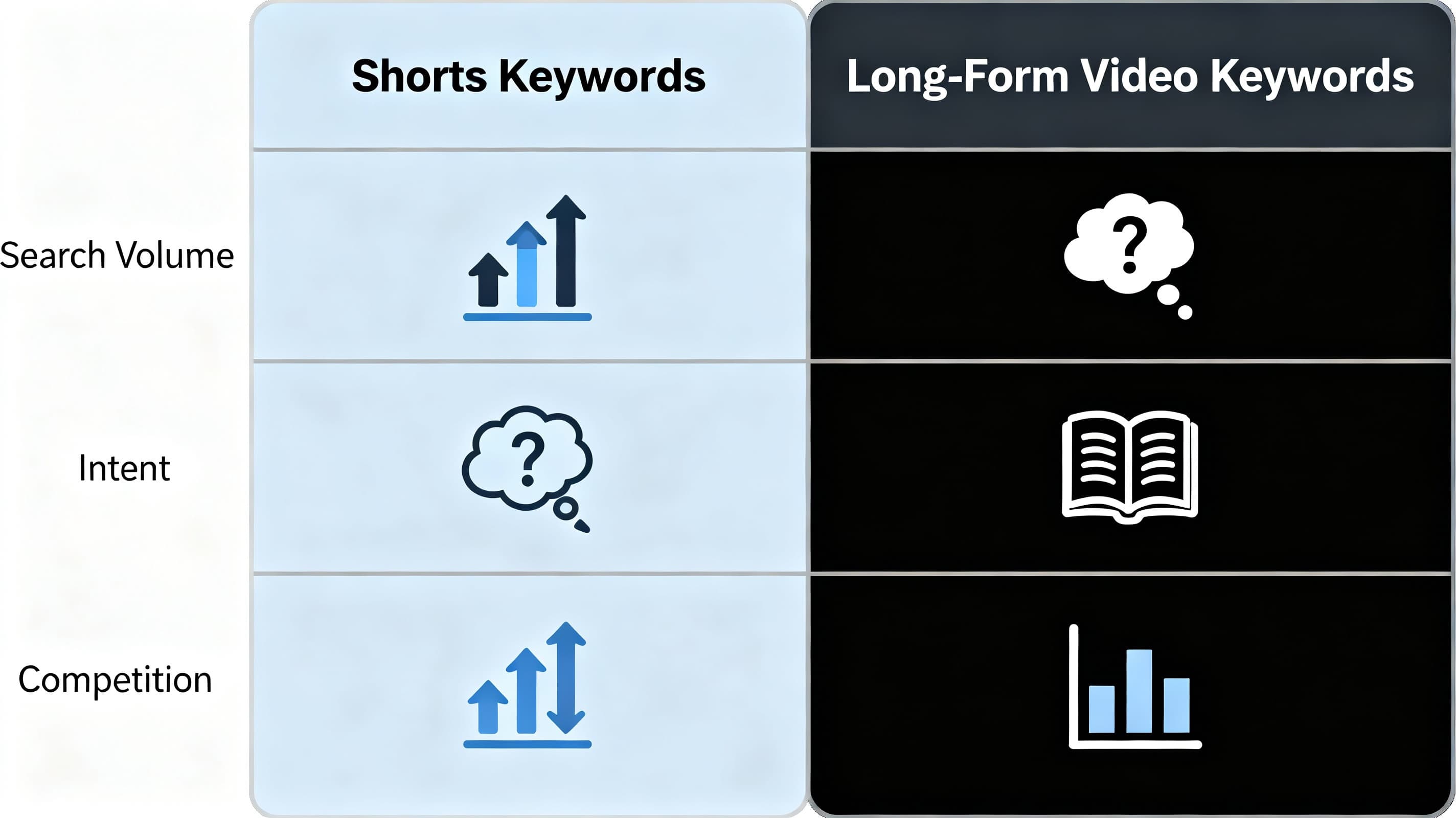
Think of it this way: Someone searching "best running shoes reviews" might watch a 20-minute deep-dive. Someone searching "quick home workout" wants a 30-second payoff. YouTube's algorithm has learned to match these different search intents with different content types.
How to Do Shorts-Specific Keyword Research
Use YouTube Search Suggest
Type your topic into YouTube's search bar and watch the autocomplete suggestions appear. These aren't randomly generated—they're powered by real search volume. If you search "how to" in fitness, YouTube might suggest "how to improve posture," "how to fix lower back pain," "how to do a pull-up." These represent high-intent, recent queries.
Analyze the Shorts Shelf Directly
Go to your niche on YouTube and look at the Shorts Shelf. Which Shorts are getting views? Which titles are appearing? Use tools like VidIQ or TubeBuddy to benchmark these videos and see their keyword strategies.
Target Specific, Short-Intent Keywords
Avoid broad terms like "fitness" or "cooking." Instead, target specificity: "5-minute ab workout," "30-second pasta recipe," "quick skincare tip." These signal Short-specific intent and face less competition.
The Sweet Spot for Keyword Volume
Find keywords with 5,000-20,000 monthly searches—they're usually the sweet spot for Shorts: popular enough to matter, not so oversaturated that you're competing with 10,000 other Shorts.
Data-Driven Title and Description Optimization
Your title and description are the first things YouTube's algorithm sees. They're also the first things viewers see. They need to work for both.
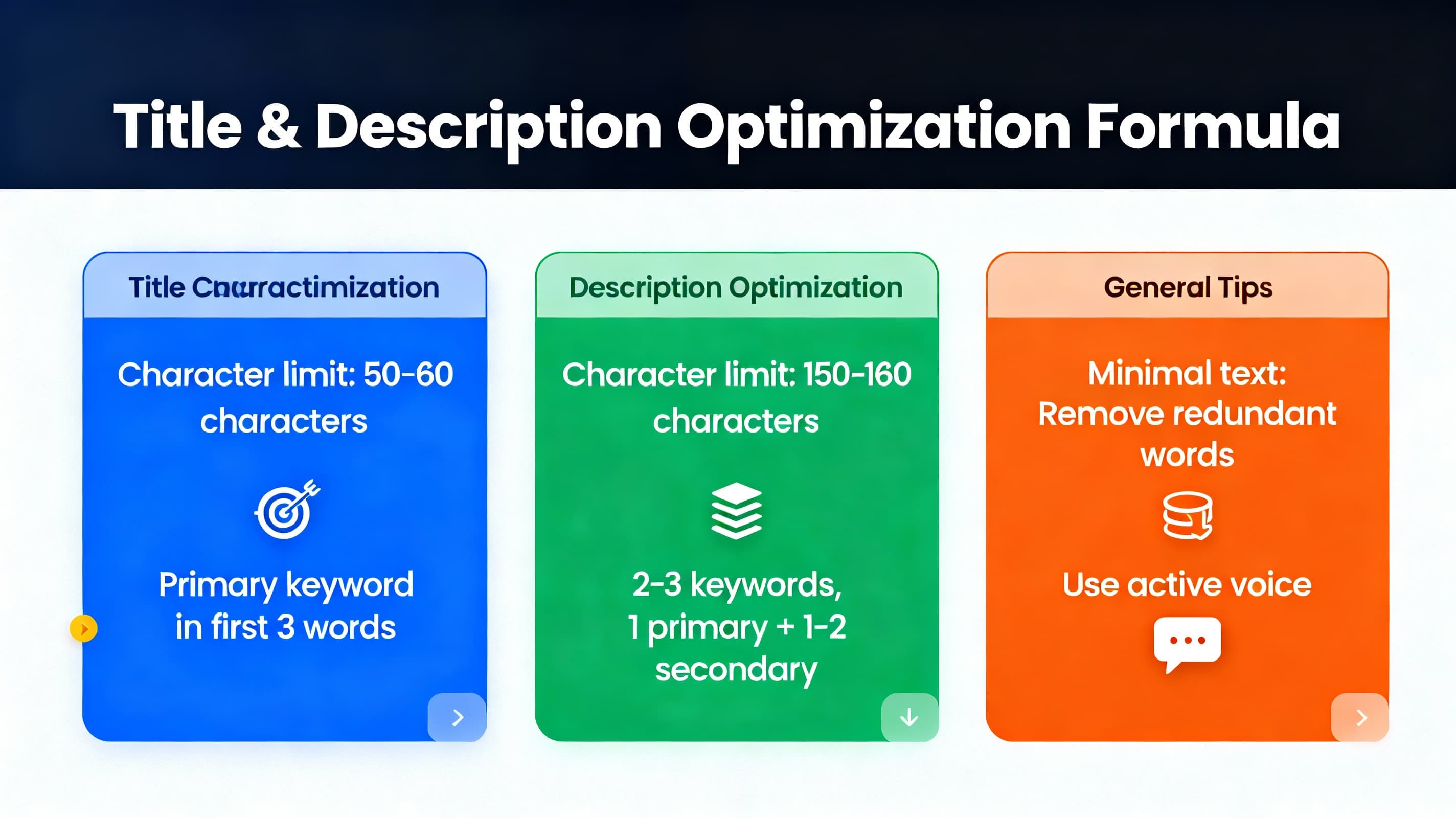
The Anatomy of a High-Performing Shorts Title
Keep it short—aim for 25-40 characters. Your title will be cut off on mobile devices if it's too long, and Shorts are consumed almost entirely on mobile.
What Works in Shorts Titles:
- Front-load your primary keyword: "5-Minute Ab Workout" beats "Quick Exercise You Can Do Anywhere in Just 5 Minutes"
- Create curiosity without clickbait: "This Trick Doubles Your Coffee's Shelf Life" is curiosity-driven and deliverable
- Use a number or specific benefit: "3 Resume Mistakes Killing Your Chances" outperforms "Resume Tips"
- Signal urgency or timeliness: "Quick AI Tool for 2026," "Last-Minute Holiday Gift Hack"
Crafting Description Text That Converts and Ranks
Your description is longer than your title but still needs precision. Research shows that descriptions under 155 characters perform best. Here's why keeping it concise matters: viewers are scrolling fast. You need to grab their attention instantly.
The Description Formula That Works:
- State what the Short delivers (2 sentences max): "Learn the fastest way to fix your posture while working from home. This 30-second routine works for anyone with a desk."
- Include your primary keyword naturally: If your keyword is "posture correction," use it in your description without forcing it.
- Add a call-to-action: "Subscribe for more wellness tips," "Try this today and let me know how it works."
- Link to related content: YouTube's algorithm notices when Shorts drive traffic to long-form content.
# Example description:
"Improve your posture in 30 seconds with this office-friendly stretch routine. No equipment needed—do this at your desk right now. Full posture guide: [link] Subscribe for more wellness shortcuts"
Best Practices for Shorts Metadata
Metadata is the umbrella term for all the structural information about your Short: titles, descriptions, tags, hashtags, captions, and on-screen text. Every element serves a purpose.

Hashtags: The Overlooked Ranking Factor
Many creators ignore hashtags because they think Shorts are algorithm-first, not hashtag-driven. They're partially right. But hashtags still matter, and their impact is underrated.
Use 3-5 relevant hashtags, not 50. YouTube's algorithm actually penalizes excessive hashtags because they signal low quality or spam. Research shows that Shorts using a strategic mix of 3-5 relevant hashtags saw up to a 15% increase in initial viewership compared to those with generic or no tags.
This ensures proper algorithm categorization. Pair it with 2-3 niche-specific micro-hashtags like #DeskFitness instead of broad tags like #Fitness.
60% niche/specific hashtags, 40% trending. Example: #OfficeWorkout (evergreen) and #FitnessMotivation2026 (trending).
On-Screen Text and Captions: The Hidden SEO Weapon
This is where many creators miss massive opportunities. YouTube indexes the text in your videos—not just your description, but the actual captions and on-screen text overlays.
Here's what that means: If you create a Short about "affiliate marketing for beginners," and those exact words appear in your captions and on-screen text, YouTube has triple confirmation of your content's topic. It becomes more searchable across the platform and even in Google Search.
Caption Best Practices:
- Always use captions: Videos with captions see a 40% increase in views and hold attention 12% longer
- Front-load keywords: Place your primary keyword in the first 5 seconds of captions
- Ensure accurate timing: Mistimed captions hurt UX and SEO. Use tools with 99%+ accuracy
- Use animated captions: Word-level animation holds attention longer than static text. Try our AI Caption Generator for automatic word-level captions
How AI Tools Improve Discoverability vs. Manual Editing
This is one of the most practical decisions you'll make as a Shorts creator: Do you manually optimize your metadata for each Short, or do you use AI tools to handle the heavy lifting?
The short answer: Both, but for different reasons.
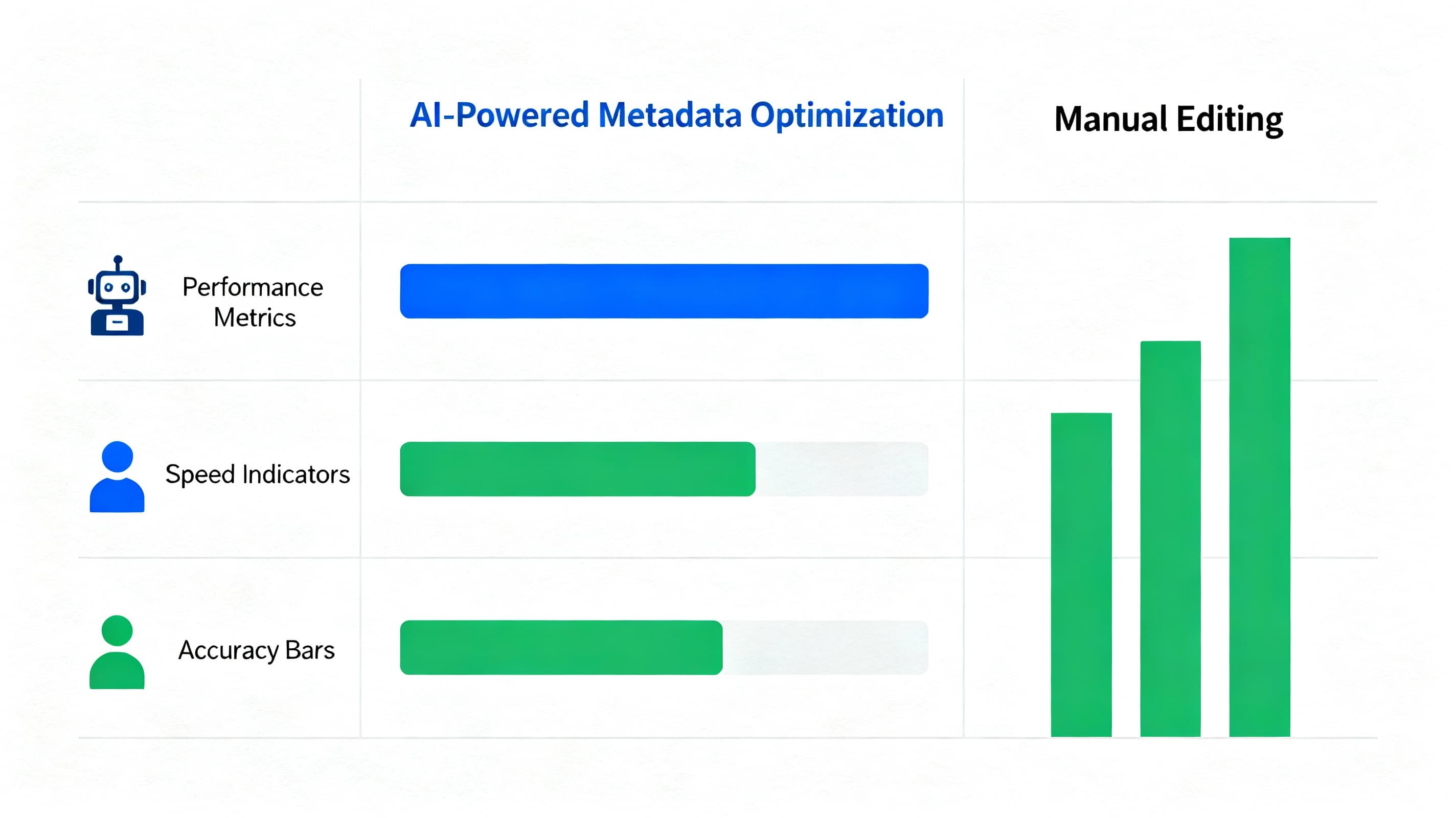
Manual Optimization: When to Use It
- New channels (first 50 Shorts): You're learning what resonates
- Evergreen content: Thoughtfully crafted variations
- Niche content with low search volume
- Brand voice consistency: Preserves control
Downside: Takes 10-15 minutes per video
AI Optimization: When to Use It
- Rapid scaling: Uploading 3-5 Shorts daily
- A/B testing at scale: Predict CTR and suggest winners
- Metadata translation: 233+ languages automatically
- Data-driven recommendations: Pattern-matching from millions
Bonus: Handles 80% of work in 10% of time
The Best Approach: Use AI tools for initial recommendations, then apply your human judgment. You get speed and data-driven insights without losing your brand voice.
The AutoShorts Revolution: From Long-Form to Viral Shorts in Minutes
Here's where the game truly changes. Creating Shorts manually is tedious. You film or record hours of content, then manually hunt through it for viral moments. You clip them, edit them, add captions, optimize metadata, and hope something sticks. It's a bottleneck that kills productivity.
What if an AI could do all of that for you?
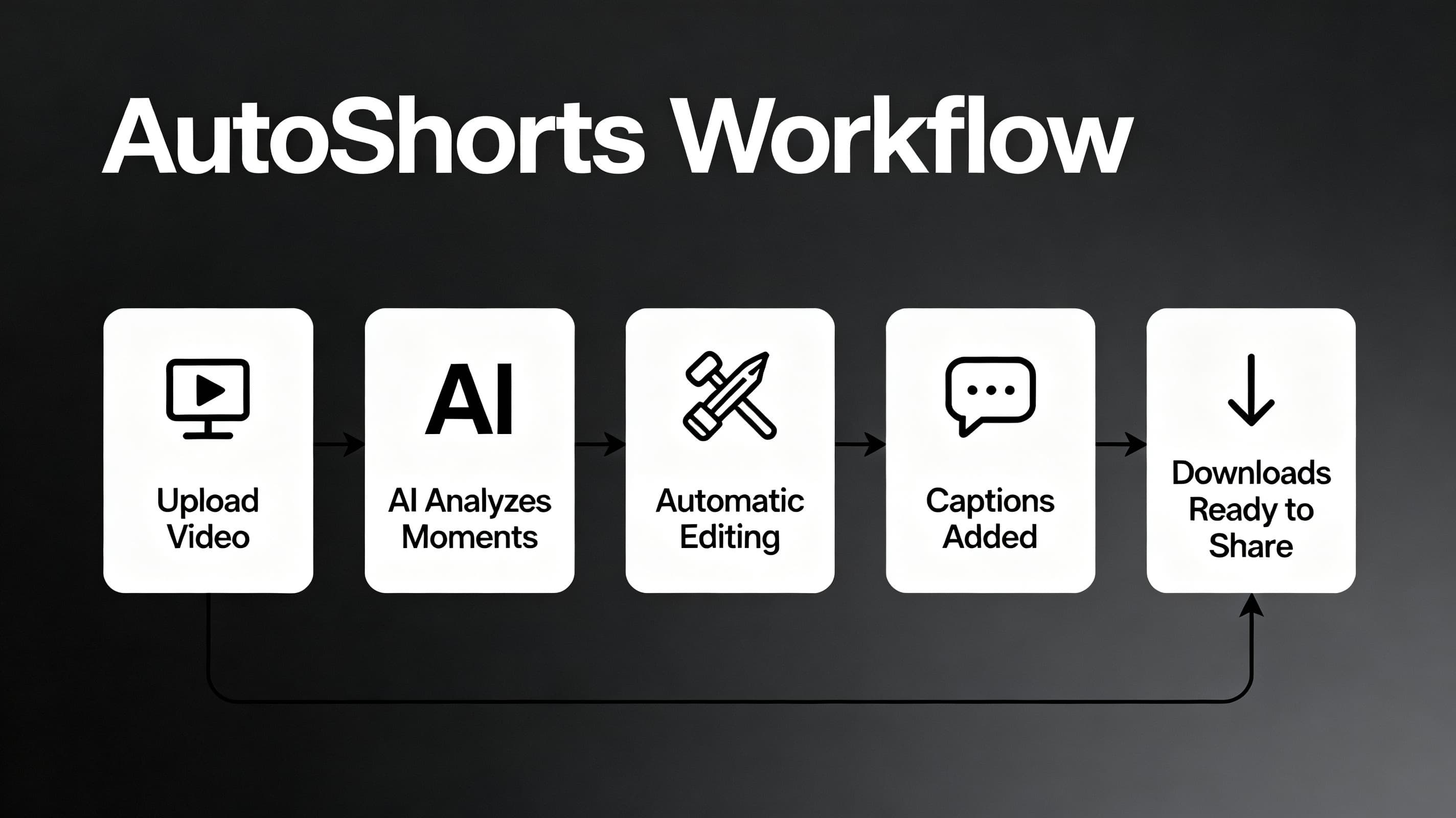
AutoShorts is doing exactly that, and it's revolutionizing how creators scale their short-form content strategy.
How AutoShorts Works
Upload Your Video
Drop a long-form video or paste a YouTube URL. AutoShorts accepts files up to 2.5GB.
Get Viral-Ready Clips
AI analyzes your content for viral moments, crops to vertical format with smart framing, adds word-level captions, and delivers 8-12 professional clips ready to post. No manual editing needed.
The Real-World Impact
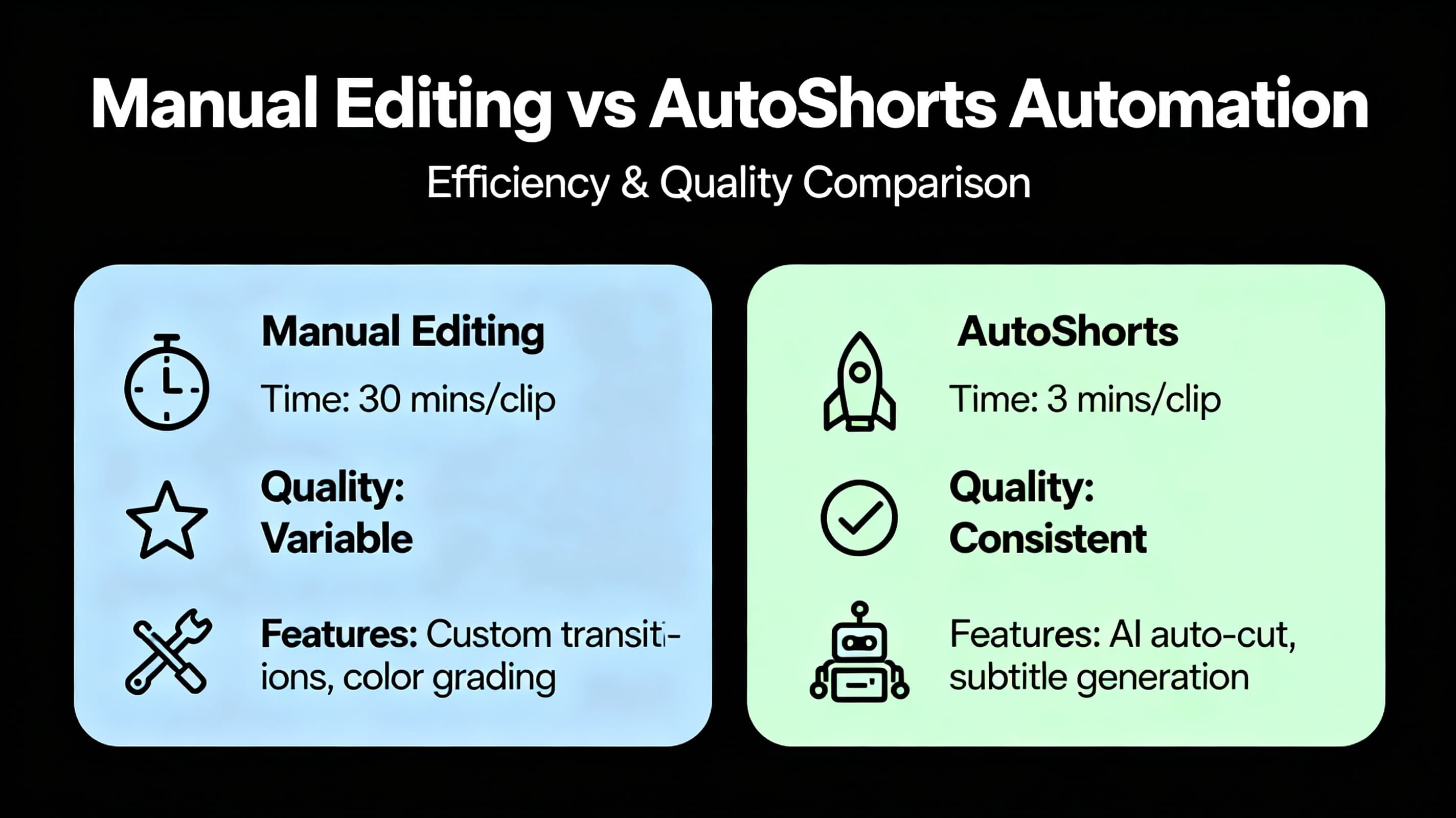
What typically takes 3-5 hours of manual editing now takes 5-10 minutes of AI processing.
A single 1-hour podcast that might yield 2-3 manually crafted clips now generates 10-15 high-quality clips.
Manual editors get tired. They make mistakes. They miss great moments. AI doesn't. Every clip gets the same level of care.
Creators report higher engagement because the AI selects moments specifically for their engagement potential.
Key Features That Matter
- AI Moment Detection: Analyzes audio intensity and engagement cues to identify the most viral-worthy moments
- Active Speaker Detection: Automatically keeps the speaker centered throughout the clip
- Word-Level Captions: Syncs word-by-word with audio (12% viewer retention increase)
Pricing and Plans
AutoShorts offers a simple credit-based system with credits that never expire:
40 credits
~40 videos
100 credits
~100 videos
250 credits
~250 videos
The Economics Are Hard to Ignore
Compare hiring a freelance editor at $30/hour for 2 hours per video: a single year of content at 2 videos/week would cost $6,240. AutoShorts? $39.99 handles roughly 2 years of content generation.
Ready to transform your long-form content into viral Shorts?
Try AutoShorts Free →Related Reading
Want to save even more time? Learn how content teams are automating their entire video workflow to save 10+ hours weekly.
Video Workflow Automation for Content Teams: Save 10+ Hours WeeklyLinking Strategies Between Shorts and Long-Form Videos
Here's a secret YouTube wants you to know: Shorts and long-form videos serve different purposes, but they're not competitors. They're partners.
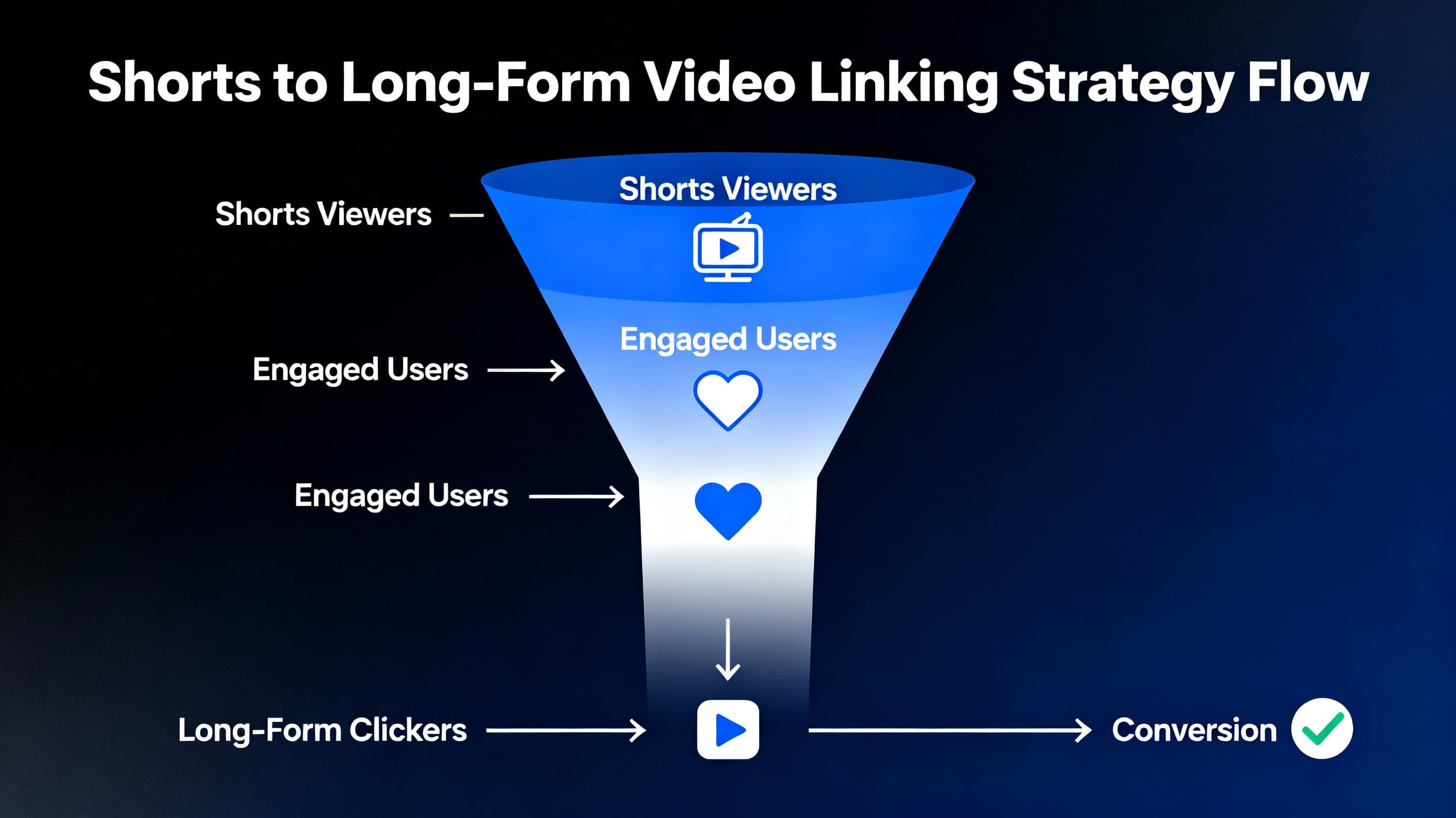
Shorts are discovery engines. They get you views from people who've never heard of you. Long-form videos are monetization and authority engines. That's where the real watch time and revenue live (Shorts can't display mid-roll ads, while long-form videos can).
The smart creator strategy: Use Shorts to drive traffic to long-form content.
How the Linking Mechanism Works
YouTube now allows you to add clickable links in Short descriptions. When viewers tap the link, they're taken directly to your long-form video, your channel, or even an external website. This is relatively new (YouTube started rolling this out in 2023), and many creators don't leverage it.
Here's why this matters for SEO: YouTube's algorithm tracks when Shorts drive traffic to long-form videos. This signals that your Shorts are attracting engaged audiences interested in deeper content. YouTube rewards this behavior by boosting both your Shorts distribution and your long-form video ranking.
The Linking Strategy That Works
Related Reading
Learn how to optimize your content for each platform's unique algorithm and audience expectations.
Multi-Platform Video Distribution Strategy: Optimizing for YouTube, TikTok, Instagram, and LinkedInThe Metrics That Actually Matter: Watch Duration and Completion
You'll see YouTube Analytics throw a lot of numbers at you: views, likes, shares, subscribers gained. But for ranking purposes, here's what actually matters.
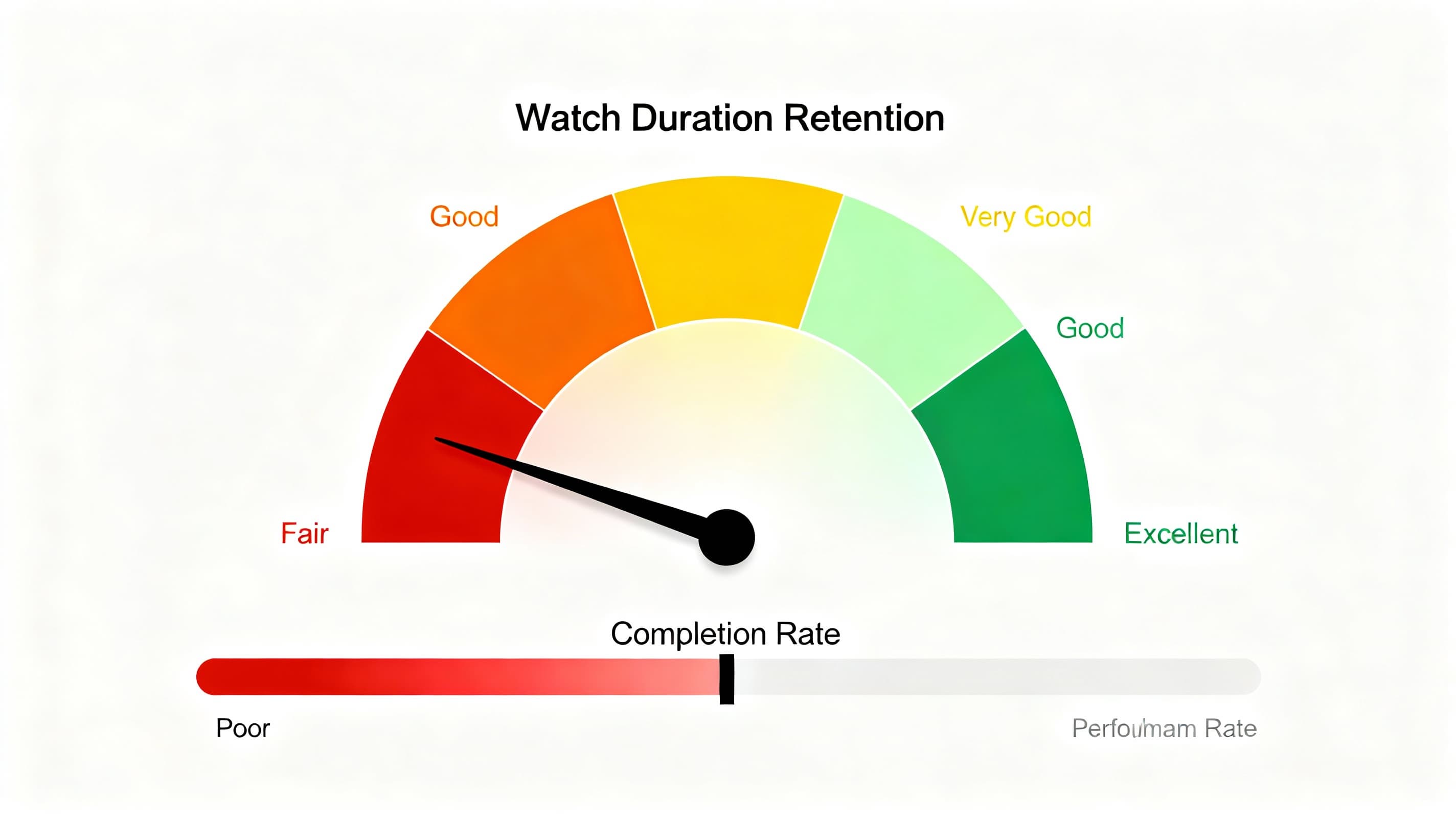
Average Percentage Viewed (The #1 Signal)
This metric normalizes for Short length. A 15-second Short where viewers watch 12 seconds (80% watched) ranks higher than a 30-second Short where viewers watch 12 seconds (40% watched). The algorithm understands that sustained attention, relative to length, is what matters.
| % Viewed | Performance | What It Means |
|---|---|---|
| Below 50% | Poor | Your hook isn't working. Redesign your opening 3 seconds. |
| 50-70% | Average | Retaining some viewers but losing others. Identify where people drop off. |
| 70-85% | Good | Retaining most viewers, some swiping before the end. |
| 85-100%+ | Excellent | Viewers watching most or all. Above 100% = people are rewatching! |
The Goal
Aim for 80%+ Average Percentage Viewed. This signals to YouTube that your content is genuinely engaging.
Engagement Metrics: Velocity Matters
YouTube heavily weights engagement in the first hour after posting. If your Short gets 20 likes in the first hour, YouTube sees this as strong social proof and expands distribution—if it takes 24 hours to reach that number, the signal is much weaker. Post when your audience is most active.
How Shorts Appear in Google Search Results
This is the game-changer of 2026. YouTube Shorts are now integrated directly into Google Search results. This is significant because it means your Shorts have two discovery paths: YouTube's feed and Google Search.

Google typically shows Shorts for how-to queries, quick-answer queries, tutorials, and trending topics—anything where a 30-60 second visual explanation is valuable. Your Short can now rank on Google's first page without having a dedicated webpage, opening a new traffic channel alongside YouTube's feed.
To Capitalize on This:
- Research how-to and quick-answer queries: These are most likely to show Shorts
- Ensure your title matches search intent: If someone searches "quick 5-minute workout," include those terms
- Make captions keyword-rich: Google indexes captions, increasing your chance of appearing
- Create problem-solution Shorts: These perform well in Google search results
The Bottom Line: Your Competitive Advantage in 2026
The short-form video space is crowded, but most creators aren't doing SEO properly. If you implement what you've learned in this guide, you're already ahead of 95% of the competition.
- You'll research keywords specifically for Shorts, not generic terms
- You'll write titles that hook viewers and signal relevance to YouTube's algorithm
- You'll add captions that boost engagement and SEO
- You'll use tools like AutoShorts to multiply your content output by 5-10x
Start today. Pick one long-form video. Upload it to AutoShorts. Generate your clips. Optimize them. Post them. Track what works. That's how you go from invisible to discovered in 2026.
Resources and Tools Mentioned
Content Generation & Automation
- AutoShorts: AI platform that transforms long-form videos into 8-12 viral-ready Shorts in minutes with auto-captions, face detection, and platform optimization
Analytics & SEO
- VidIQ: AI-powered YouTube analytics with SEO recommendations
- TubeBuddy: Metadata optimization and competitor analysis
- Google Trends: Identify seasonal and trending keywords
- YouTube Studio Analytics: Built-in analytics for tracking metrics
Article Updated: November 2025
This guide represents the state of Shorts SEO in 2026, incorporating both traditional optimization techniques and cutting-edge AI tools like our YouTube Shorts Maker that are reshaping how creators approach content strategy.
Related Reading
If you're creating Shorts from podcast content, we've created a complete framework for extracting viral moments and distributing them across platforms.
Podcast to Shorts: The Complete Repurposing Framework for GrowthReady to Scale Your Shorts Strategy?
Our YouTube Shorts Maker turns your long-form videos into viral short clips automatically. Upload once, get clips optimized for every platform—complete with captions and perfect framing.
Try the YouTube Shorts MakerAutoShorts를 만드는 사람들

Nicolai Gaina
AutoShorts 창립자
샌프란시스코 베이 에어리어에서 12년 이상의 전문 경력을 보유한 소프트웨어 엔지니어. 소프트웨어 개발, 콘텐츠 제작, 소셜 미디어 성장 전문가로, 데이터 기반 성장 전략, AI, 콘텐츠 크리에이터를 위한 임팩트 있는 온라인 도구 개발에 뛰어납니다.
관련 게시물

How to Explode Your TikTok Views in 2026
Stop struggling with 50 views. Master the 3-second rule, watch time optimization, content pillars, and the TikTok algorithm to grow your audience in 2026.

How to Get More Instagram Followers Organically in 2026
Master Instagram organic growth without ads. Learn profile SEO, Reels strategy, posting times, hashtag tactics, and the algorithm signals that drive real follower growth.

Multi-Platform Video Distribution Strategy: Optimizing Shorts for YouTube, TikTok, Instagram, and LinkedIn
Learn how to adapt your short-form videos for each platform's unique algorithm. Stop posting the same video everywhere and start seeing real results.

The 2026 LinkedIn Playbook: How to Win When Everyone Else is a Robot
Master LinkedIn's authenticity era with strategies for short-form video, algorithm optimization, profile SEO, and lead generation that out-humans the bots.

How to Make Viral Videos in 2026: The Complete Guide
Stop chasing the algorithm. Learn the proven framework for creating viral videos that people actually want to share—from hooks that grab attention in 3 seconds to the emotions that drive millions of views.

Viral Caption Styles 2026: Best Fonts & Trends to Boost Retention
Learn the science behind viral captions in 2026. From karaoke-style highlighting to platform-specific fonts, discover what makes viewers stay and watch.