
Here's the honest truth: if you're only releasing your podcast as audio, you're leaving massive growth on the table.
Picture this. You spent two hours recording an incredible episode. Your guest shared gold. The insights are fire. And then... it goes out to your 5,000 podcast listeners. Meanwhile, TikTok has 1.5 billion active users scrolling right now, desperate for something interesting.
What if that same two-hour episode could reach millions?
It can. But only if you stop thinking about podcasting as an audio-only game.
Why Nobody Finds Your Podcast (And How to Fix It)
Here's what the data shows: 87% of top podcasts maintain a YouTube presence, and 82% use Instagram. Why? Because short-form clips drive audience growth way better than hoping people stumble upon your podcast app.
The Engagement Multiplier
Instagram Reels from top podcasts receive 724% more engagement than the platform average. That's not luck. That's strategy.
One podcast episode isn't one piece of content anymore. It's five to ten pieces of content waiting to be repurposed.
How to Extract Your Best Moments (Manual vs. AutoShorts)
Let's start with what actually works.
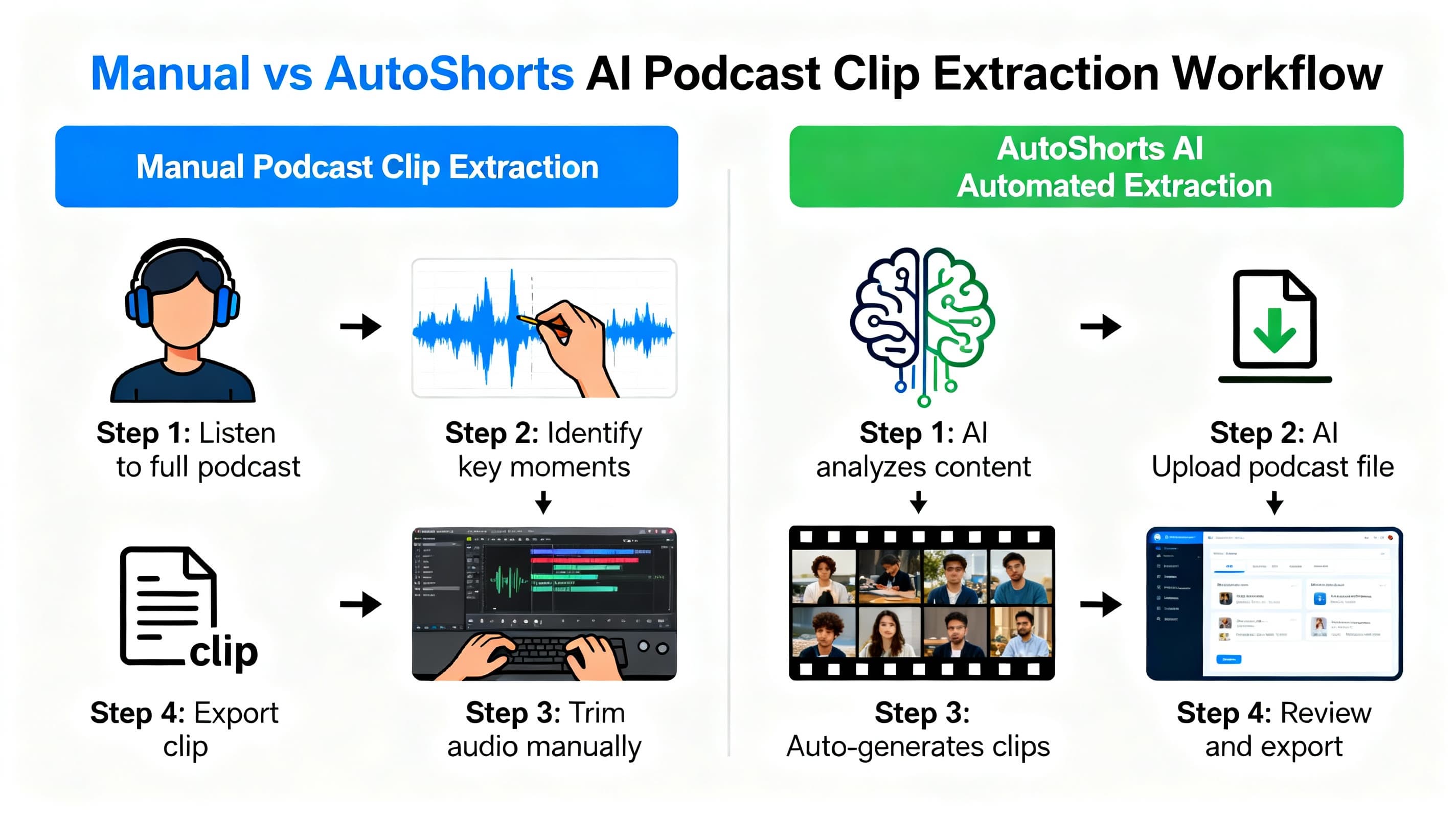
The Manual Way
You sit down, headphones on, notebook ready. You listen through your episode. When something hits—a surprising stat, a funny moment, a powerful insight—you mark the timestamp.
This takes time. A 60-minute episode typically takes 30-45 minutes of active listening to identify the best moments. Then you edit, trim, caption, and export. Total time investment: about an hour per episode.
But here's the advantage: you know your content better than any AI. You understand the nuance. You catch the moments that only make sense to your community.
The AutoShorts Way
Upload your episode. Wait 8-10 minutes. Download eight to ten fully edited, captioned vertical clips.
AutoShorts uses machine learning to identify patterns from millions of viral videos. It looks for moments where people speak with energy, natural comedic beats, topic transitions, and emotional shifts. It's not perfect, but it's fast.
The Math
AutoShorts saves you 70% of your editing time. What took 60 minutes now takes 15.
Are all the clips usable? Not always. Maybe seven out of ten are immediately shareable. The other three need tweaking or rejection. Even so, you're ahead.
The Hybrid Approach (What Actually Works)
Use AutoShorts to generate your initial clips quickly. Spend 10 minutes reviewing them. Keep the ones that resonate. Drop the ones that don't. Customize per platform (add captions, adjust timing, tweak CTAs).
This combines AI speed with human judgment. You get consistency without burnout.
Segmentation: Structure Your Episodes for Easy Extraction
Here's something most podcasters miss: how you record affects how easy it is to repurpose later.
If your episode is just a continuous 60-minute conversation with no structure, extracting clips is chaos. If you think about architecture while recording, clip extraction becomes almost automatic.
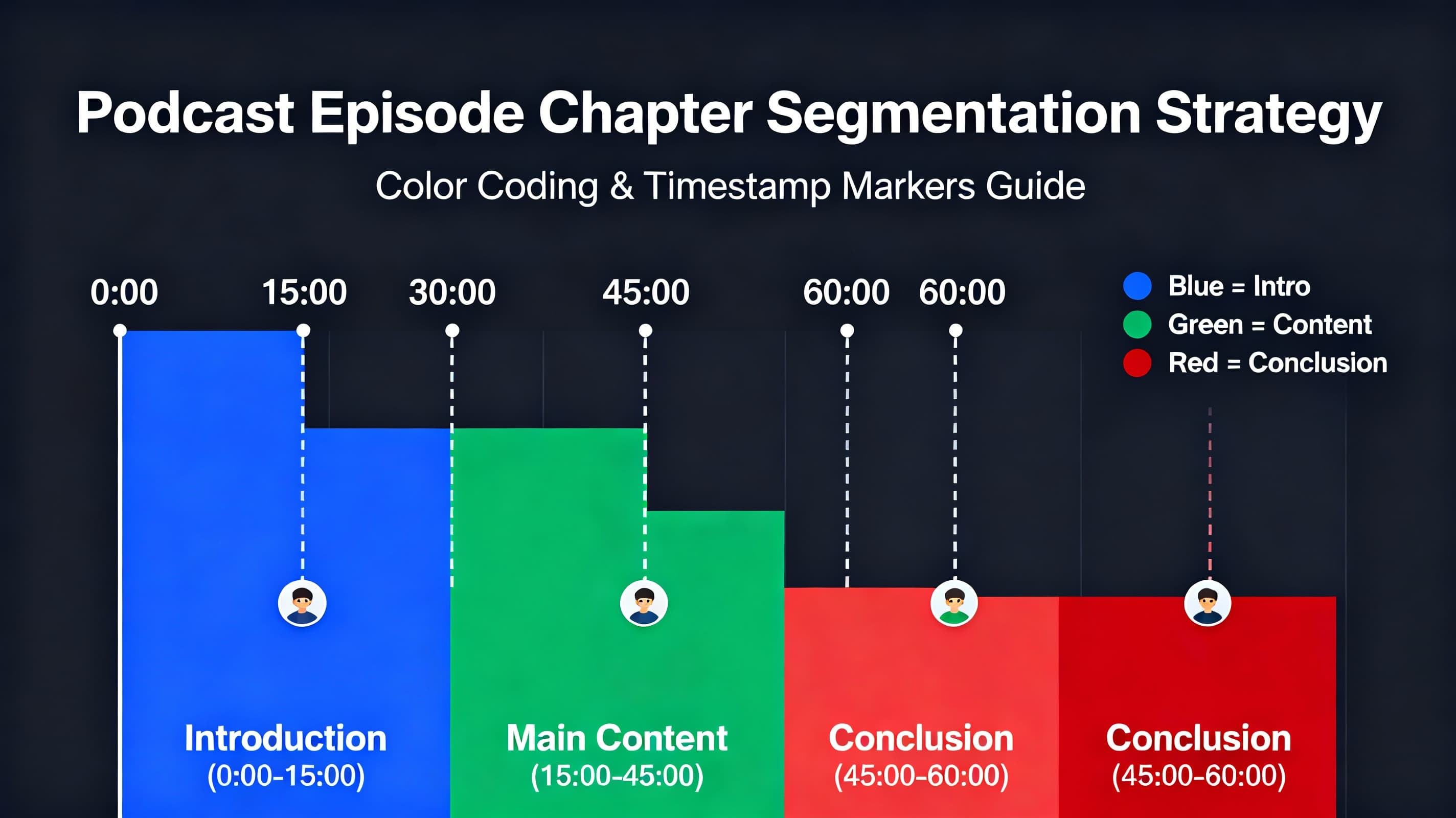
Most successful podcasts follow this natural structure:
The Three-Act Breakdown
- Introduction & hook (2-3 minutes)
- Main content with stories and insights (80% of episode)
- Conclusion and call-to-action (2-3 minutes)
Within that, you have natural segments—topics or stories that last 3-7 minutes. These segments are your clip goldmines.
Pro Tip
Add chapter markers with timestamps as you edit. Takes five minutes per episode and saves you hours later. Most podcast hosts support chapters natively.
Building Your Distribution Calendar (The Secret Sauce)
Here's where most podcasters fail: they create clips randomly and post whenever they remember.
Real growth comes from consistency.
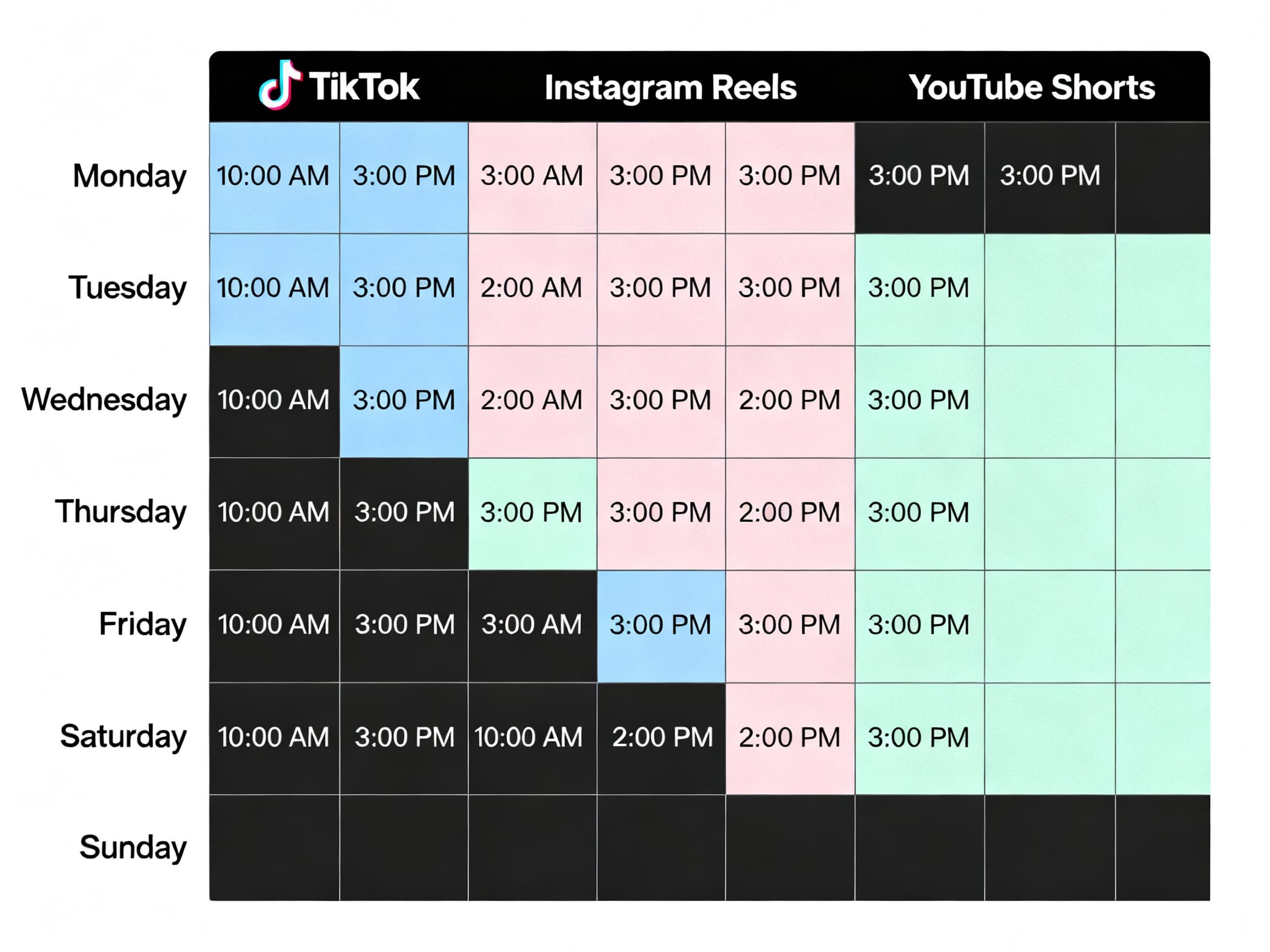
Use this rhythm:
That's 4-5 posts per week from one or two episodes.
You can post this in a spreadsheet with columns for Date | Platform | Clip Topic | Status | Views | Engagement. Update as clips go live, and you'll spot patterns in what actually works.
Analytics: The Metrics That Actually Matter
Stop tracking total views. Seriously.
A video with 1,000 views and 60% completion rate is more valuable than one with 10,000 views and 20% completion. Here's why: platforms use completion rate as a quality signal. High completion = algorithm boost = more distribution.
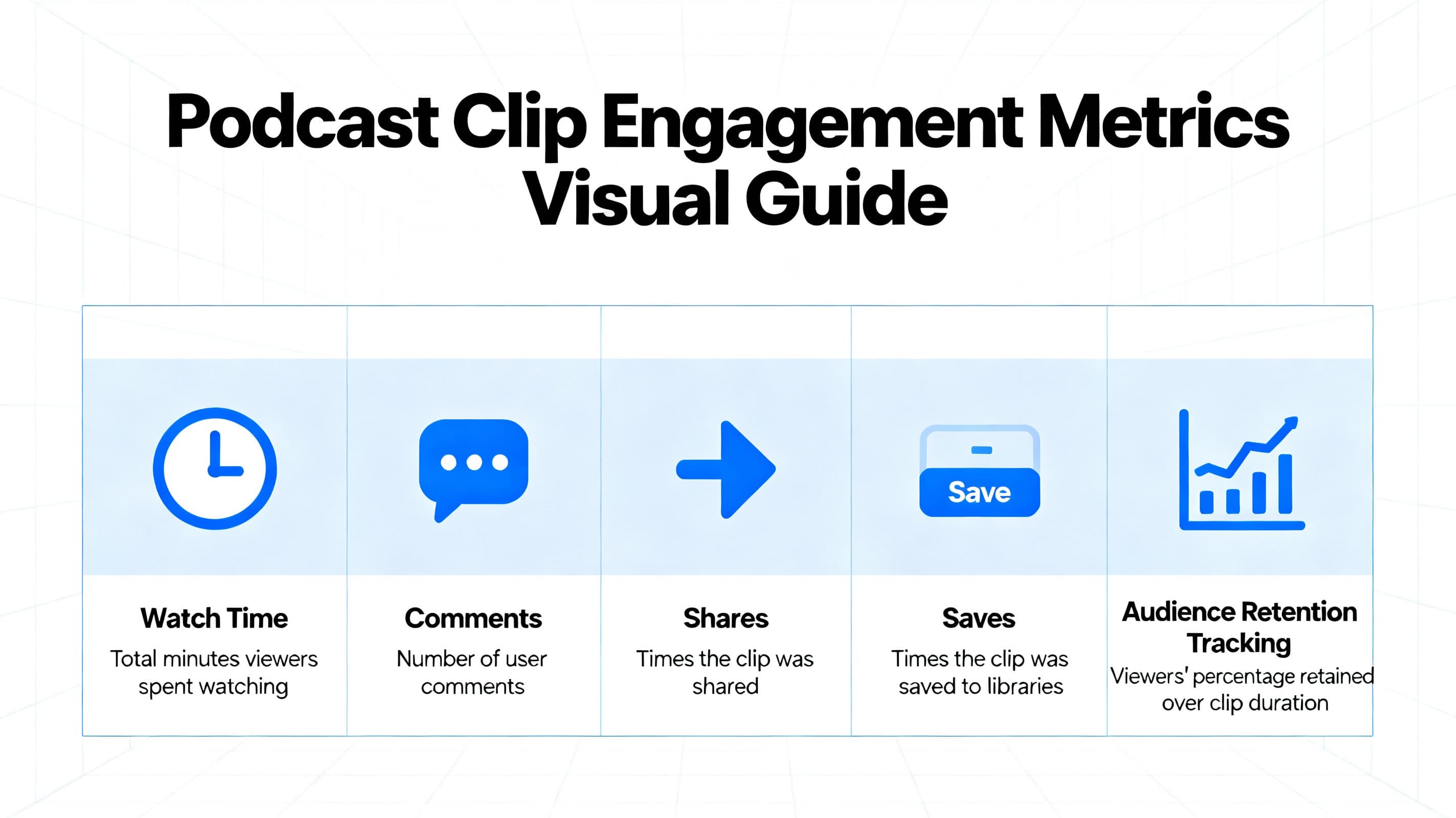
What to Track Daily
- Completion rate (% who watch the whole thing—aim for 60%+)
- Watch time (total minutes watched across all viewers)
- Engagement rate (likes + comments + shares divided by views)
What to Track Weekly
- Click-through rate (how many click to your podcast—2-5% is solid)
- Share rate (how often people share—2-4% is strong)
- Follower growth (new followers from clip strategy)
After two weeks of posting, look at your top five clips. What do they have in common? Same length? Same topic? Same energy level? That's your winning formula. Do more of that.
Platform-Specific Strategies That Actually Work
Not all shorts are created equal.
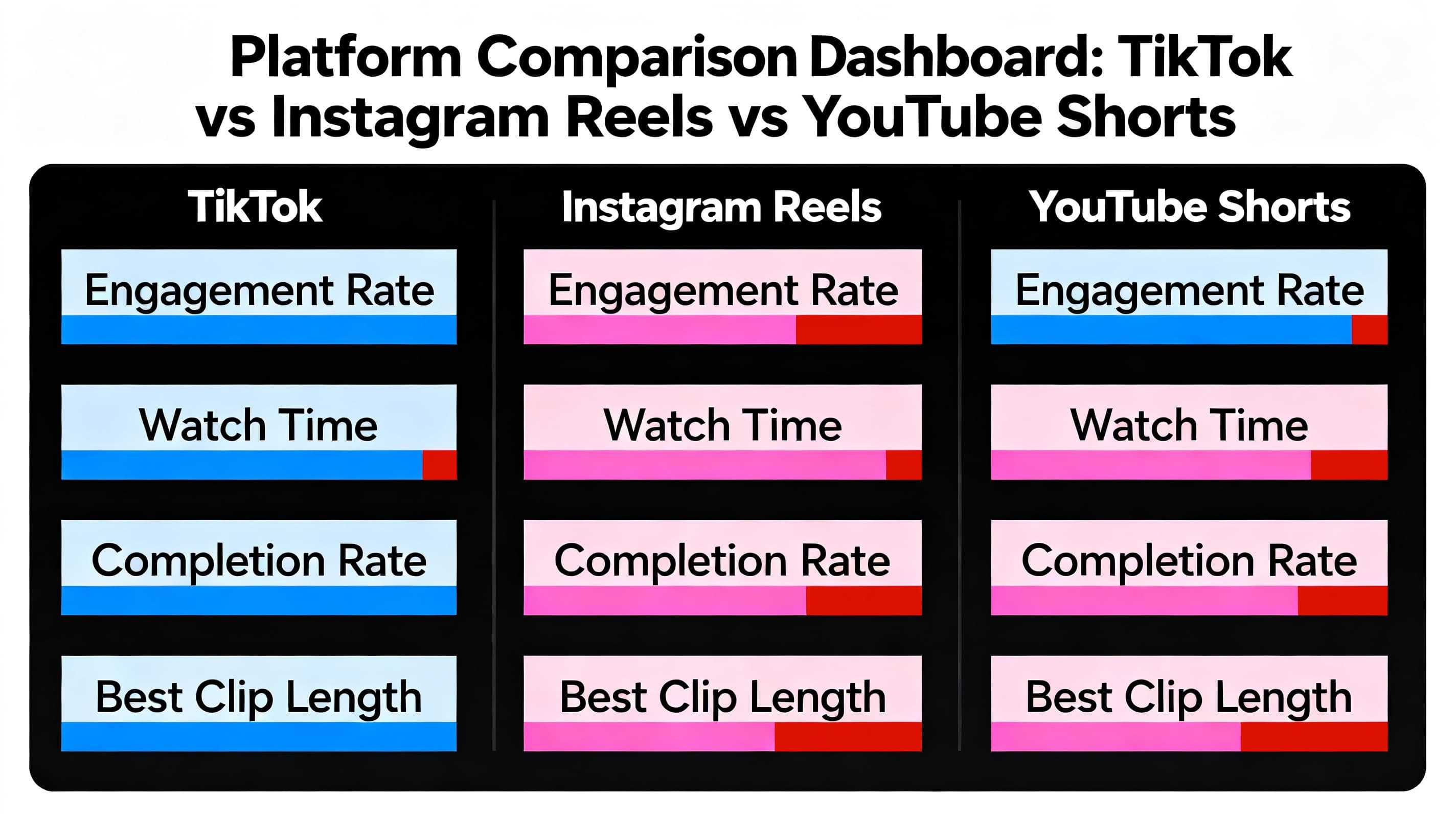
TikTok: The Algorithm Meritocracy
TikTok doesn't care about your follower count. Your first 100 views are a test. If 70% of people watch to completion and 10% engage, TikTok pushes it to 5,000 people. Then 50,000. This is how unknowns go viral.
Post 30-60 second clips, 3-5 times per week. Use trending sounds. Reply to every comment in the first hour (this signals engagement to the algorithm).
Instagram Reels: Leverage Your Followers
Instagram has your followers. The algorithm shows Reels to them first, then to broader audiences based on performance.
Post 45-60 second value-bomb clips (specific tips, frameworks). Keep it to 1-2 Reels per day maximum. The metric that matters most here is saves—people saving your Reel to watch later or share with friends. A 500-view Reel with 50 saves beats a 5,000-view Reel with 5 saves.
YouTube Shorts: The Hybrid Play
YouTube integrates Shorts into your main channel. They get recommended to your subscribers first, then to general discovery.
Post 45-90 second clips, 3-5 times per week. Include your podcast link in the description. Create custom thumbnails. This drives consistent traffic back to your full episodes.
The Tools: Your Tech Stack
You don't need much:
AutoShorts.app (AI clips) or Descript (transcription + chapters)
Buffer or Hootsuite (one click, multiple platforms)
Native platform analytics (TikTok Analytics, Instagram Insights, YouTube Studio)
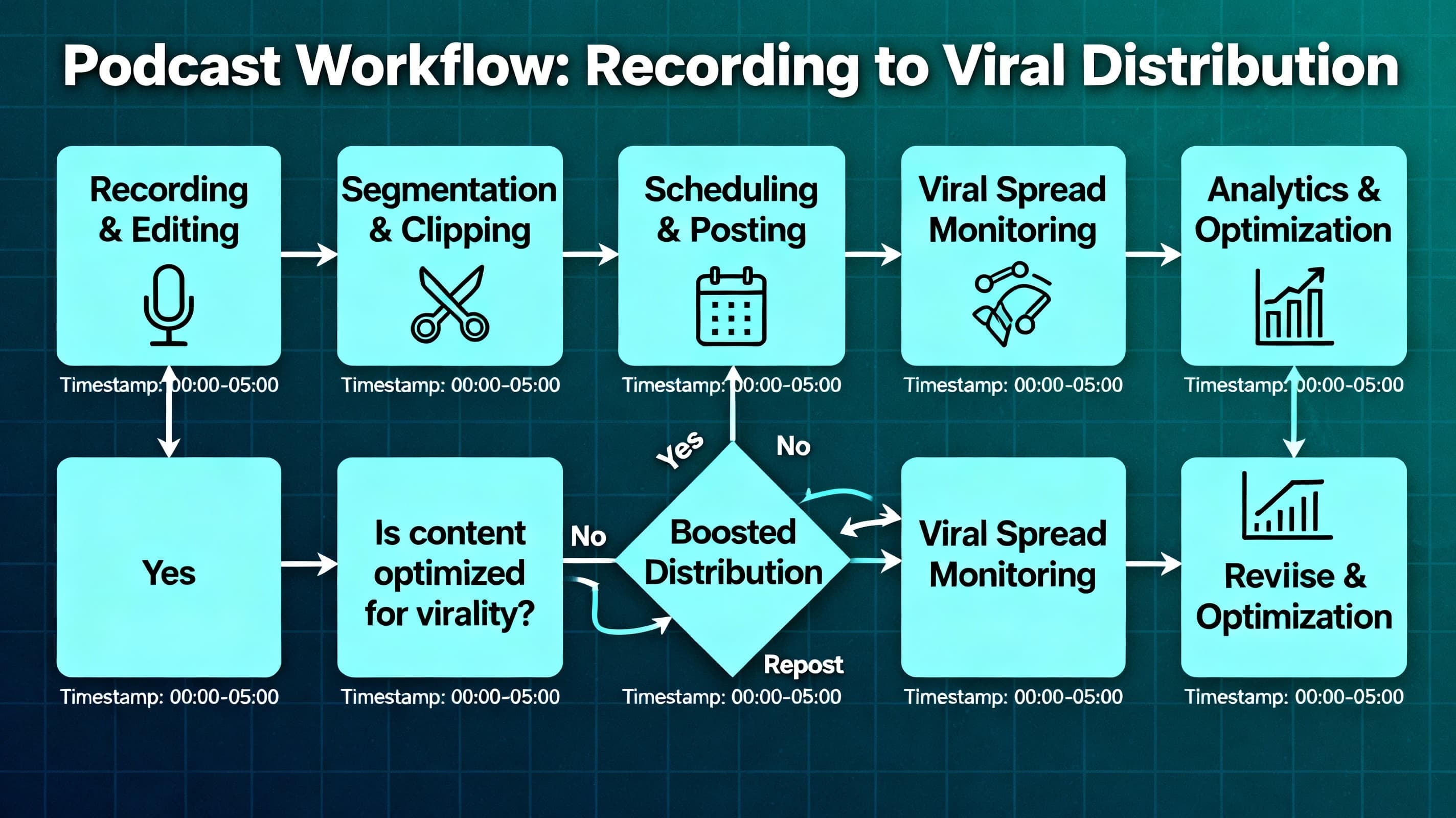
The efficient workflow looks like this:
Record your podcast
Upload to AutoShorts or generate transcript + chapters
Download clips (or extract manually)
Customize per platform (5-10 minutes total)
Schedule across platforms (5 minutes using Buffer)
Monitor analytics daily
Total time per episode: 60-90 minutes from recording to scheduled clips across four platforms.
Real Numbers: What to Actually Expect
Let's be real about projections.
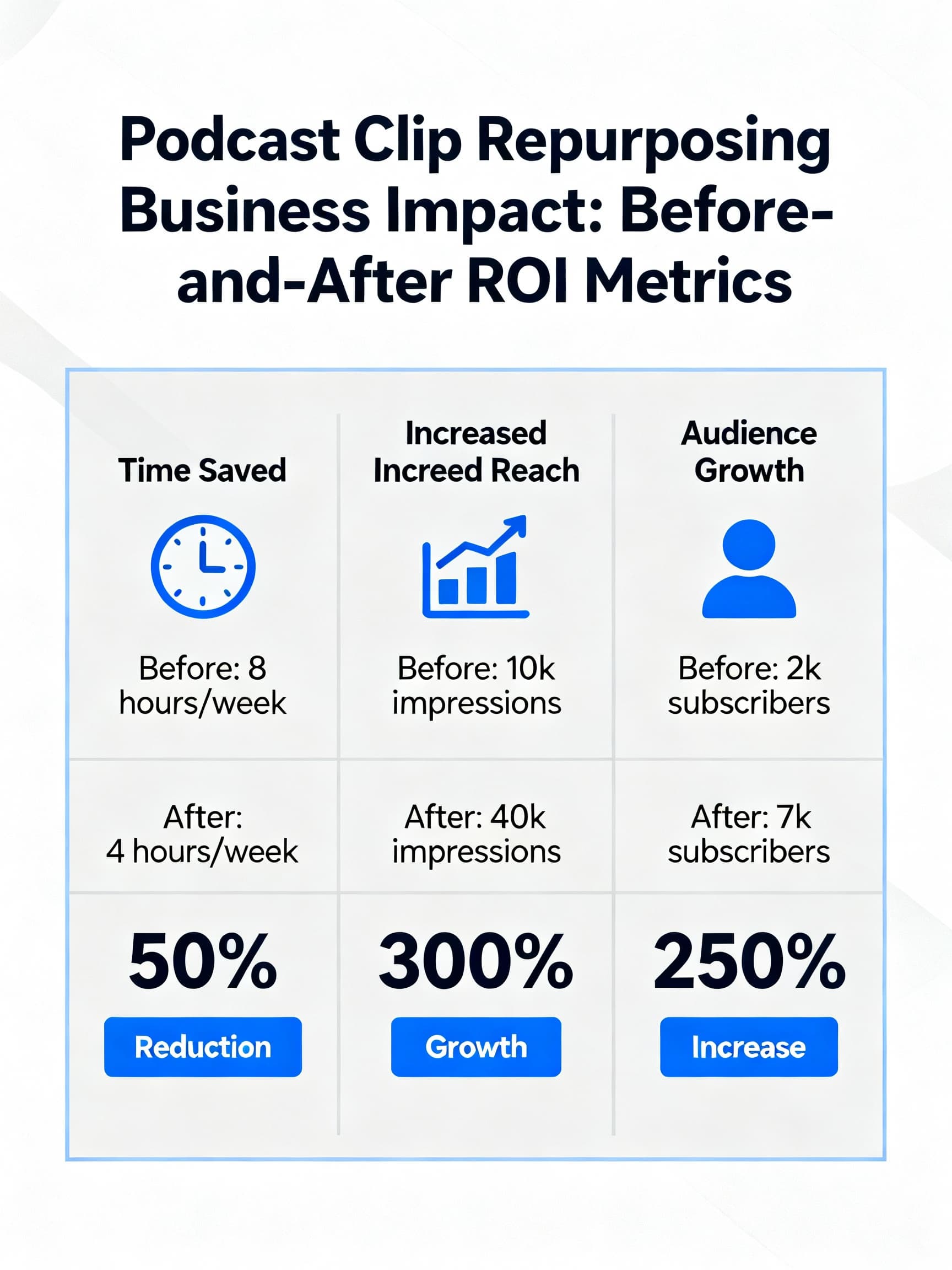
Conservative (First 90 Days)
- Total views across platforms: 50,000-230,000
- New followers: 100-500
- New podcast listeners from clips: 2,000-20,000
Aggressive (Consistent, 5x per week)
- Total views across platforms: 600,000-1.8M
- New followers: 2,700-7,000
- New podcast listeners from clips: 10,000-35,000
The variable? Engagement. Reply to comments. Take it seriously. Engagement signals matter to every algorithm on every platform.
Mistakes That Kill Growth (And How to Avoid Them)
Mistake #1: Radio silence after posting
You post a clip and disappear. Comments sit unanswered. The algorithm notices. Engagement is critical. Reply in the first hour.
Mistake #2: Clips that are too long
Podcast creators love extracting 90-120 second clips because "there's so much good content!" Shorter almost always wins. Aim for 30-60 seconds.
Mistake #3: Posting the same clip everywhere identically
TikTok isn't Instagram isn't YouTube. Each platform has different norms. Spend 5 extra minutes adapting per platform.
Mistake #4: Ignoring your analytics
You have data. Use it. Look at what's working and do more of it. Most creators quit before the pattern emerges.
Mistake #5: Waiting for perfection
Your first clips will feel awkward. Post anyway. You learn faster by iterating than by perfecting.
Your First 30 Days: The Action Plan
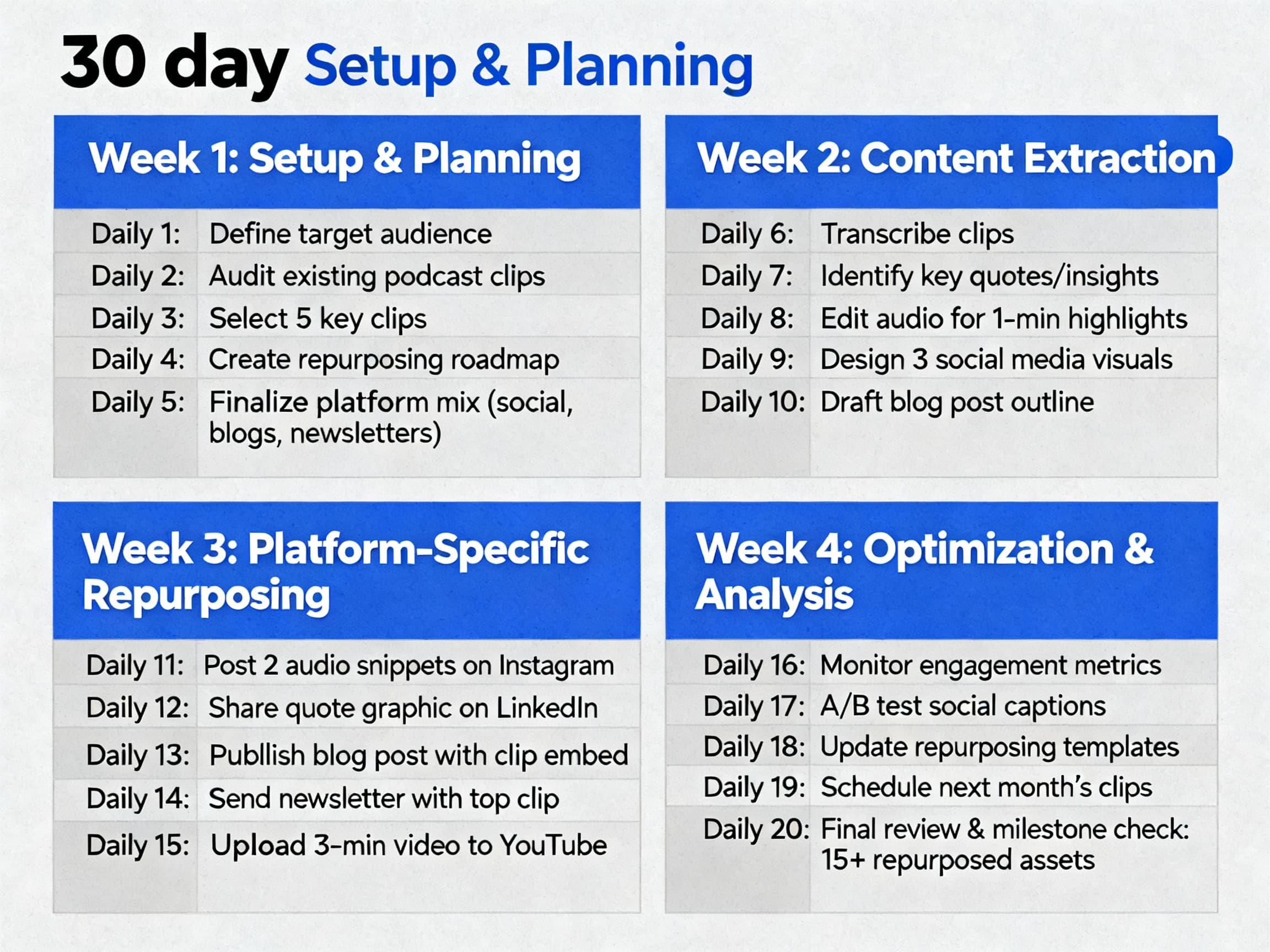
Week 1: Setup
- Extract or generate clips from one episode
- Create a simple spreadsheet tracker
- Set up accounts if you don't have them
Week 2: Testing
- Create platform-specific versions of your clips
- Schedule first batch
- Set up analytics dashboards
Week 3: Distribution & Engagement
- Post 4-5 clips across platforms
- Engage with comments daily
- Note which clips perform best
Week 4: Optimization
- Analyze your data
- Identify your best-performing clip type (story, value bomb, hype)
- Adjust next month's strategy based on this insight
After 30 days, you'll have 12-20 clips posted, you'll know what works for your audience, and you'll have the foundation for sustainable growth.
The Bottom Line
Your podcast is infrastructure. One 60-minute recording becomes:
- 5-10 short clips
- 1 blog post
- 1 email series
- Multiple social posts
- Countless audience touchpoints
Stop asking "how do I create more content?" Start asking "how do I multiply the value of content I've already created?"
The podcasters winning in 2025 aren't necessarily the ones with the best audio quality. They're the ones who understood that audio-only is dead. They're the ones repurposing aggressively.
Your podcast episode can reach millions. The tools exist. The strategies are proven. All that's left is execution.
Start with one episode this week. Extract or generate 5-10 clips. Post your first one on Tuesday. Track what happens. Iterate based on data.
The barrier to entry isn't skill or equipment anymore. It's consistency. And you've got this.
Quick Reference
| Manual extraction | 50-60 minutes per episode |
| AutoShorts | 15 minutes per episode |
| Time savings | 70% |
| Optimal posting frequency | 3-5 clips per week |
| First 90-day reach potential | 50,000-1.8M total views |
| Conversion to listeners | 2-35x your usual monthly podcast growth |
| Best first platform | TikTok (algorithm-driven, no followers needed) |
| Most reliable conversion | YouTube Shorts (direct podcast link integration) |
| Highest engagement metric | Instagram Reels (saves matter most) |
| Tools you need | AutoShorts + Buffer + native analytics |
| Cost | $15-30/month |
| ROI | 25-100x your investment in 90 days |
Now stop reading. Start posting. Your audience is waiting.
Related Reading
Ready to Transform Your Podcast into Viral Shorts?
Our YouTube Shorts Maker turns your podcast episodes into 8-12 viral-ready clips in minutes. Upload once, get clips optimized for every platform—complete with captions and perfect framing.
Try the YouTube Shorts MakerКто стоит за AutoShorts

Nicolai Gaina
Основатель AutoShorts
Инженер-программист с более чем 12-летним профессиональным опытом в районе залива Сан-Франциско. Специализируется на разработке ПО, создании контента и продвижении в социальных сетях, преуспевает в стратегиях роста на основе данных, ИИ и создании эффективных онлайн-инструментов для контент-мейкеров.
Подписаться: LinkedInПодробнее об AutoShorts
Похожие статьи

Viral Caption Styles 2026: Best Fonts & Trends to Boost Retention
Learn the science behind viral captions in 2026. From karaoke-style highlighting to platform-specific fonts, discover what makes viewers stay and watch.

How to Make Viral Videos in 2026: The Complete Guide
Stop chasing the algorithm. Learn the proven framework for creating viral videos that people actually want to share—from hooks that grab attention in 3 seconds to the emotions that drive millions of views.

Turn Blog Posts Into Viral Shorts: The Content Repurposing Playbook
Stop letting your blog posts work at 20% capacity. Learn the proven framework for repurposing written content into viral TikTok, YouTube Shorts, Instagram Reels, and LinkedIn videos that multiply your reach by 5-10x.

Короткие видео для адвокатов: Построй авторитет без нарушения профстандартов
Узнайте, как адвокаты и юристы могут этически использовать TikTok, Instagram Reels и YouTube Shorts для повышения авторитета, привлечения клиентов и соблюдения требований коллегии адвокатов.

Multi-Platform Video Distribution Strategy: Optimizing Shorts for YouTube, TikTok, Instagram, and LinkedIn
Learn how to adapt your short-form videos for each platform's unique algorithm. Stop posting the same video everywhere and start seeing real results.
Как агентам по недвижимости использовать короткие видео для привлечения клиентов и объектов
Узнайте, как риэлторы используют TikTok, Instagram Reels и YouTube Shorts для поиска новых объектов и клиентов. Стратегии по платформам, готовые сценарии и метрики эффективности.